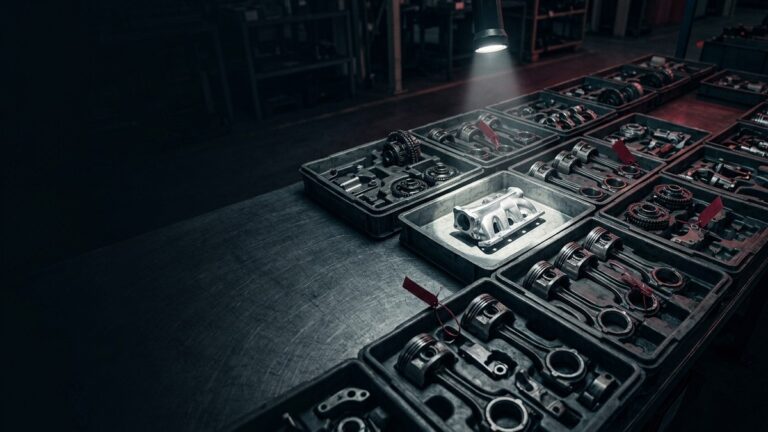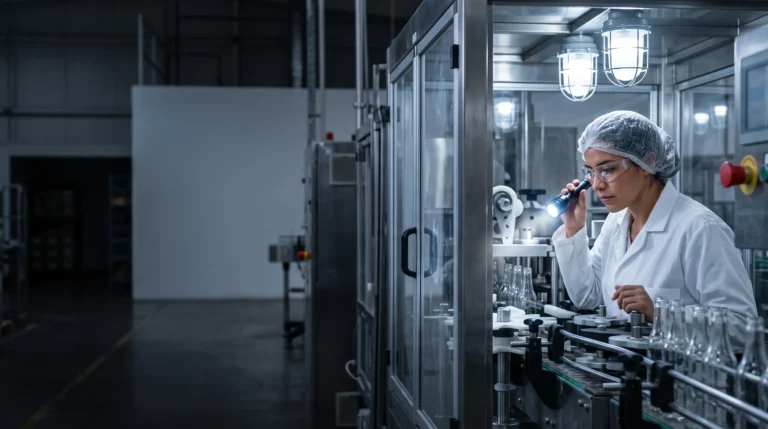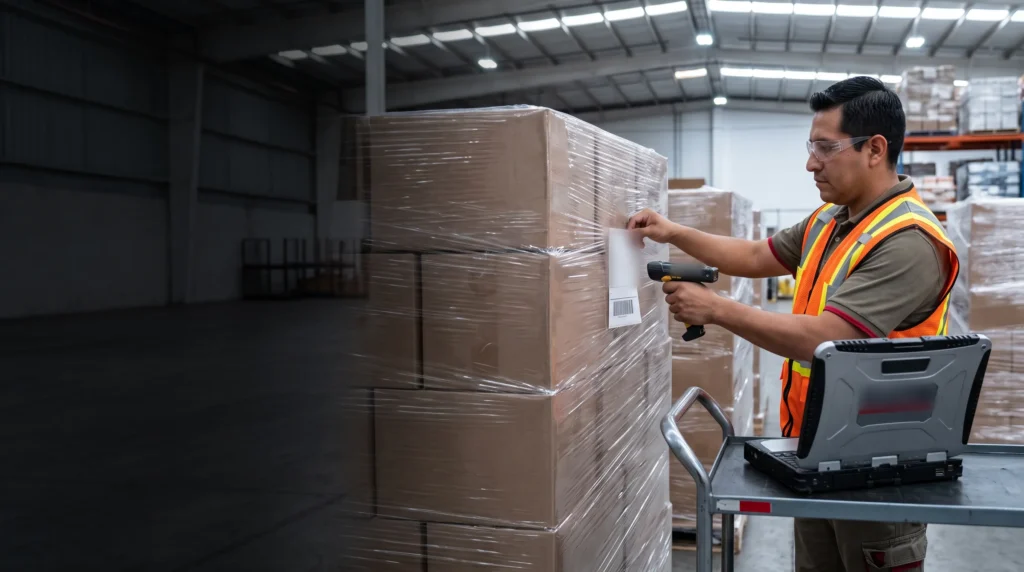
Take a finished-product pallet at random and reconstruct it: which incoming lots of preform, cap, label, and case went into it, on which line, on which shift, and where the rest of each of those lots ended up. Any plant can do it given enough time. The drill adds only one condition: doing it against the clock, with the people on shift and the records as they exist today.
A Trace Has Two Directions and an Arithmetic Test
Backward, from the finished pallet to every incoming lot that fed it. Forward, from an incoming lot to every pallet, customer, and delivery it reached. And then the mass balance: what was received, consumed, scrapped, and what is still in the warehouse. If those quantities do not reconcile, you do not have a trace. You have a claim with attached documents.
The Chain Does Not Break Within the Records, but Between Them
Breaks are almost never in the systems. They are at the handoff points, and they are ordinary operating events:
- A partial pallet returning to the warehouse after a model changeover without its identification traveling with it.
- Rework that is reintroduced into a later run and recorded, if at all, as a note.
- A lot changeover where the last cases of one lot and the first of the next share the same conveyor for ninety seconds.
- Retained samples taken correctly but recorded against the wrong lot.
Each one is normal. Each one costs you an hour you hadn’t budgeted.
The Clock Matters Less Than What It Exposes
Customer and retailer schemes typically expect a full trace within a two- to four-hour window, and most plants believe they are within it. The drill is the only thing that tells you whether that belief survives a Friday afternoon, a supervisor on vacation, and a partially used lot of labels.
The label deserves special attention, because in packaging material it is usually the only physical carrier of the lot code. If the label version, date code, and lot code on the pallet do not match the record, the trace stops at the pallet. Verifying what is physically printed is part of the drill, not an extra.
What a Serious Traceability Drill Looks Like
- At least once a year, on a lot chosen at random and without prior notice.
- Against a stated objective time, with the mass balance closing within an agreed tolerance.
- Gaps recorded as findings, with owner and due date.
- Corrective actions closed, and the drill repeated to confirm the gap was actually closed.
A drill that always passes on the first try is usually a drill that was scheduled.
What We Do During a Trace, a Hold, or a Recall
- Physical reconciliation against the record: we locate, count, and segregate every unit of a lot still in your warehouse, so the mass balance closes on a physical count and not on an assumption.
- Label and code verification: by sampling or 100%, of lot codes, date codes, and label versions on held or released material, with deviations recorded pallet by pallet.
- Containment crews on short notice: sorting, Repacking, re-labeling, and handling of retentions in your plant or in your external warehouse, from a shift to a continuous operation while the retentions are open.
- Documentation it can deliver: every inspected unit recorded by lot and pallet, with an issued report that goes straight into your file for the customer or auditor.
About our scope: RIDYS Group inspects packaging material, components, and containers. We do not handle food products intended for direct consumption, and we do not hold HACCP, FSSC 22000, BRC, or ISO 22000 certification. Our personnel follow the customer’s hygiene and GMP protocols and work under the customer’s documentation and supervision.
The drill is cheap; the unplanned version is not. Tell us your target traceability time and we’ll tell you where crews usually lose it.