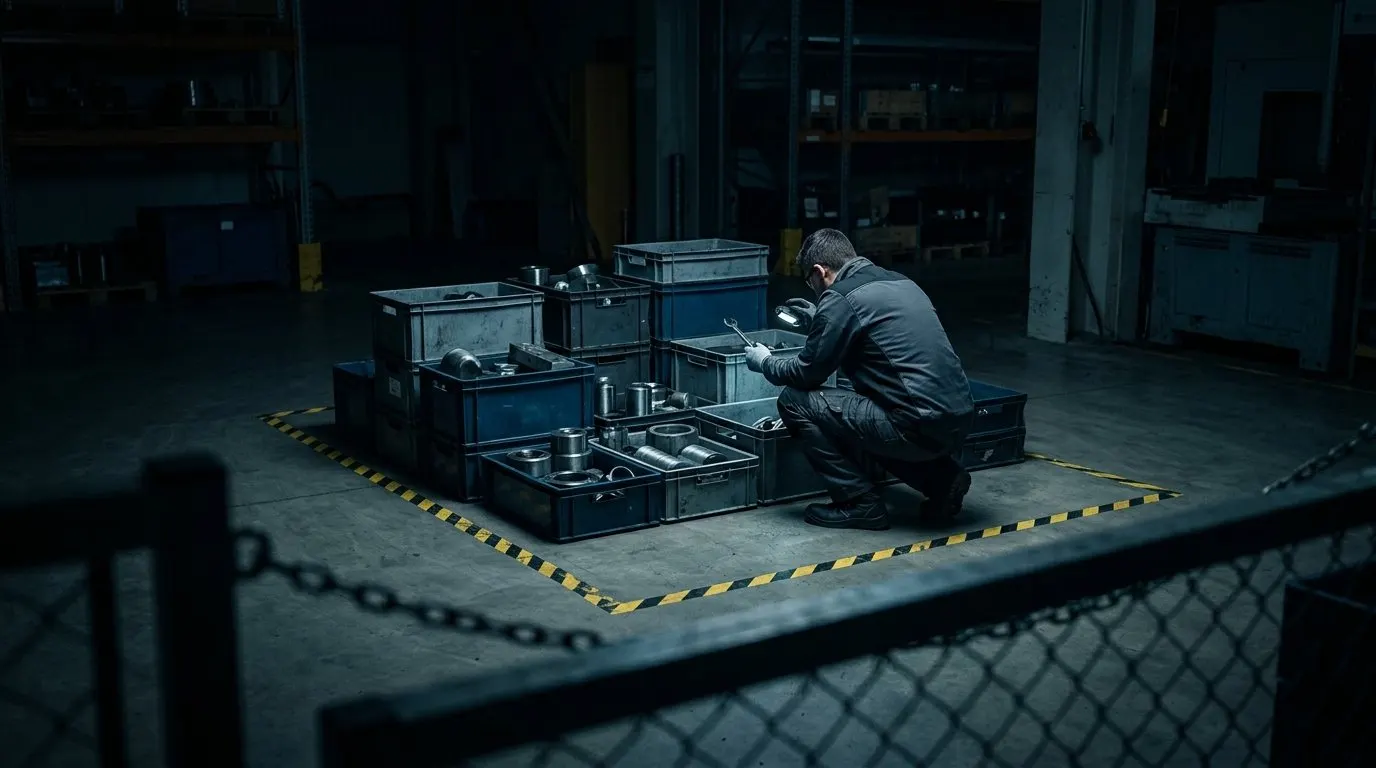
GP12 is the early production containment defined by GM for launches and changes: an additional off-line inspection until the process is proven stable. RIDYS Group implements it at the plant with our own personnel under REPSE (Mexico’s Registry of Specialized Service Providers).
Unlike a reactive action, GP12 is normally activated by the Tier 1 supplier itself as a preventive launch measure, before any complaint exists. That is the difference from Controlled Shipping CS1 and CS2, which the OEM imposes once the problem has already escalated.
Done well, a GP12 prevents exactly that escalation.
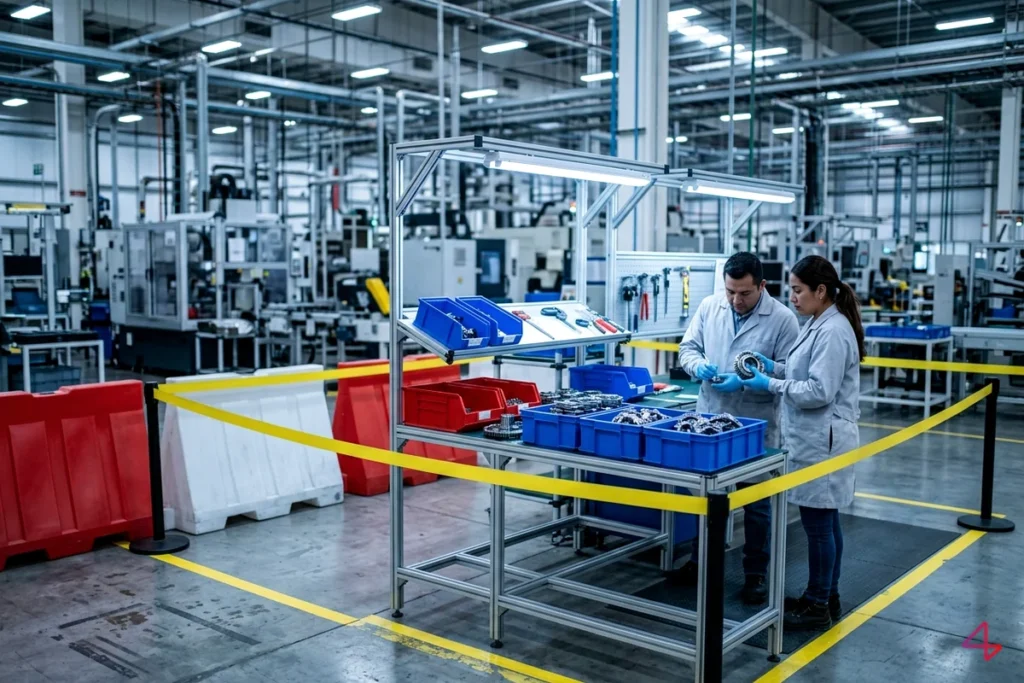
The service is structured around four elements.
Validation of the acceptance criteria. Before the first part is inspected, what is considered conforming and what is not is documented, aligned with the program’s APQP and PPAP Level 3 requirements. Without that written agreement, 100% inspection means nothing.
100% Inspection of the Contained Product, performed under coded work instructions with revision control and standardized OK/NOK visual aids at the station.
Recording and Analysis of Defect Behavior, with daily counts, material disposition, Pareto analysis, and trend. That information feeds the customer’s root cause analysis and supports lifting the containment.
Documentary Evidence per Lot, closed with the Lot Release Certificate, a signed three-party document that holds up to OEM audits and regulatory review.
When the program requires it, we add statistical validation on critical characteristics — Cp and Cpk per AIAG MSA 4th edition — to objectively demonstrate process capability.
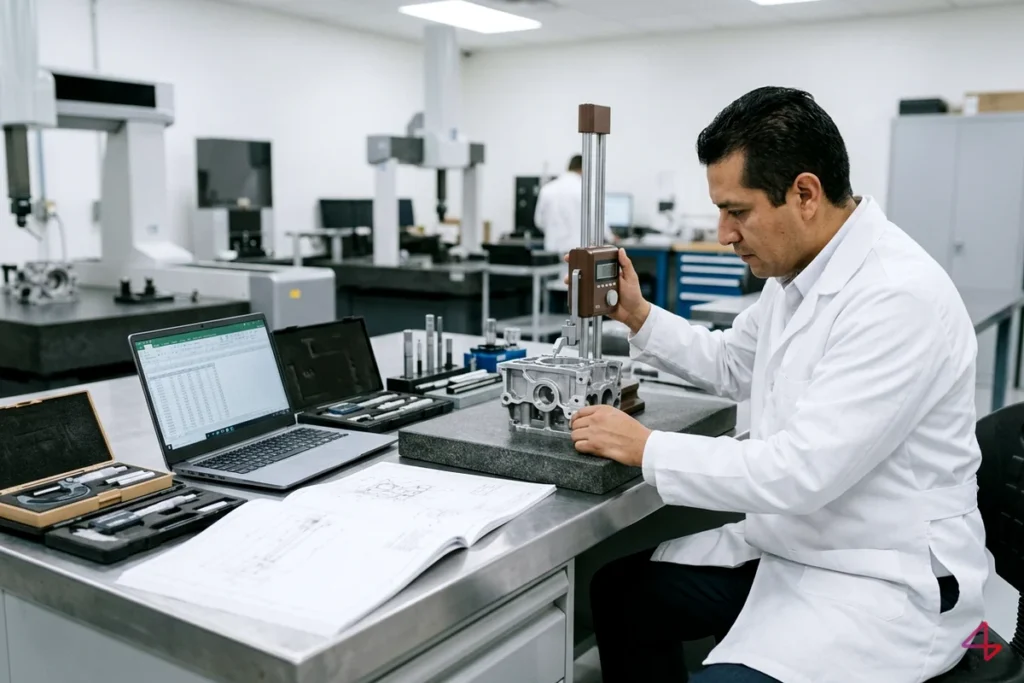
The exit criteria are defined by each OEM, and it is advisable to review them from the start so as to avoid any surprises.
As a general reference, the following are required: approximately 30 days of production with no defects detected, along with all document approvals in order. Both conditions are required: a clean period without the complete file does not close the containment, and neither does a complete file with incidents.
That is why documentation quality is not an administrative formality. It determines when you stop paying for containment. A GP12 that drags on because the records do not support closure costs more than the service itself.
We receive your RFQ with the program details: part number, daily volume, characteristics to contain, available acceptance criteria, location, and required shifts. We issue a quote with scope and rate, and upon receipt of the purchase order, we schedule the start.
If your company has not yet onboarded us as a supplier, onboarding can run in parallel without delaying the start of the service.
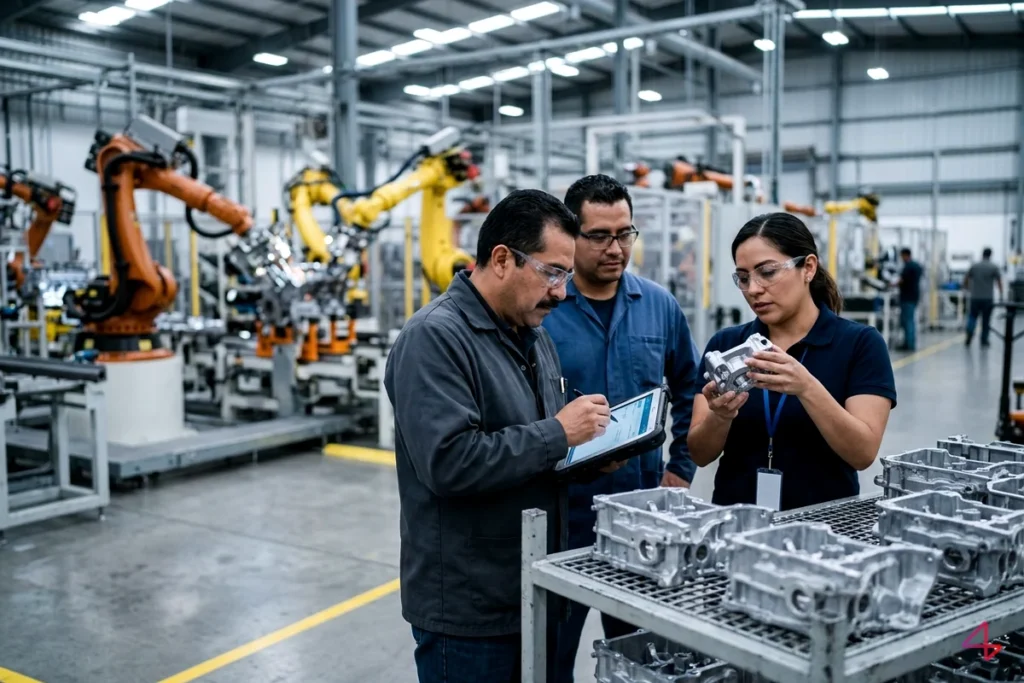
A GP12 Can Be Staffed With People. It Is Closed With Documentation.
Our team has 18+ years of experience in Mexico’s automotive corridor. We hold ISO 9001:2015 certification (Orion Registrar, ANAB accredited) and REPSE registration ARR197/2024 with Mexico’s Ministry of Labor (STPS). Our personnel hold DC-3 certificates and documented training records. Our processes are carried out in accordance with our customers’ IATF 16949 requirements, applying the AIAG Core Tools.
San Luis Potosí is our operating base. We serve plants in San Luis Potosí, Guanajuato (León, Silao, Irapuato, and Celaya), Querétaro, and Aguascalientes; on request, also in Jalisco and in Saltillo and Ramos Arizpe, Coahuila.
The service is usually performed inside the customer’s plant, in a marked-off containment area separated from the normal production flow.
GP12 is preventive launch containment, normally activated by the Tier 1 supplier. CS1 and CS2 are controlled shipping levels imposed by the OEM once an escalation already exists; CS2 also involves an independent third party.
It depends on each OEM’s exit criterion. As a reference, around 30 days with no defects detected plus complete document approvals.
The customer defines them according to their program requirements. RIDYS validates and documents them and builds the work instructions and visual aids on them.
Yes. Daily defect report, weekly trend, and, depending on the service level contracted, a monthly executive report.
Yes. REPSE registration ARR197/2024 with Mexico’s Ministry of Labor (STPS), with IMSS and INFONAVIT contributions current and verifiable
Describe the material, the defect, and the volume, and we will send back a proposal with rate, start-up time, and reporting scheme.
RIDYS Group · Av. Universidad 1085, Azteca Norte, 78310 San Luis Potosí, S.L.P. · Phone: 444 171 4514
