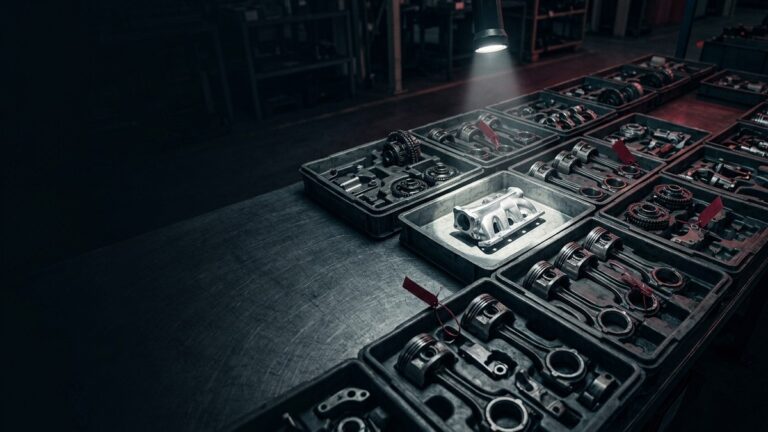
Ask a plant how it controls foreign material and the answer usually comes as equipment: a metal detector at the end of the line, X-ray if the budget allowed, both checked daily with test pieces and logged. It is a good answer to a different question. Detection tells you what has already entered the process. It says nothing about whether it should have been able to enter.
The Categories That Matter Most Are the Ones Detectors Do Not See
Metal is the easy case: it is dense, it is detectable, and the technology to find it is mature. That is why it is rarely the one that reaches the consumer. Those that do reach the consumer are glass, brittle hard plastic, and in some operations, ceramics: materials with densities close to that of the product and packaging, which a standard detector passes by without registering anything.
A Glass and Brittle Plastic Policy That Actually Works
Most plants have it written; fewer operate it. A real one is boring and specific:
- A register of every glass or brittle plastic item in the production area, with its location.
- An entry rule: nothing enters unless it is shatterproof or protected.
- Inspection of those items at a defined frequency, including those above the line that no one sees from the floor.
- A Breakage Procedure that names the isolation zone, the disposition of exposed product, and the signature required to restart.
A policy that consists of an instruction to “be careful” is not a policy.
Where the Fragments Really Come From
Almost never from the dramatic scenario. It is a cracked guard that has been that way for weeks. A pallet with a splintered board. A brittle plastic tote at the end of its life, the kind that goes from fine to shattered in a single drop. A cut cable tie with half of it never recovered. A lamp above the filler that a contractor replaced two years ago with whatever was in the truck. Each is an equipment or housekeeping issue that quietly became a food safety issue, and each is visible to anyone who goes looking.
Model Changeovers Concentrate the Risk
Guards are removed, tools are taken out, parts are changed, and people work quickly against the clock. The inspection that matters is the one that is carried out after the line is rearmed and before starting up: every guard in place and intact, every tool accounted for, no screw loose in a frame where vibration will eventually move it. Tool control sounds like an aviation practice imported into the food industry. It is, and it works for the same reason.
The Incoming Side Closes the Loop
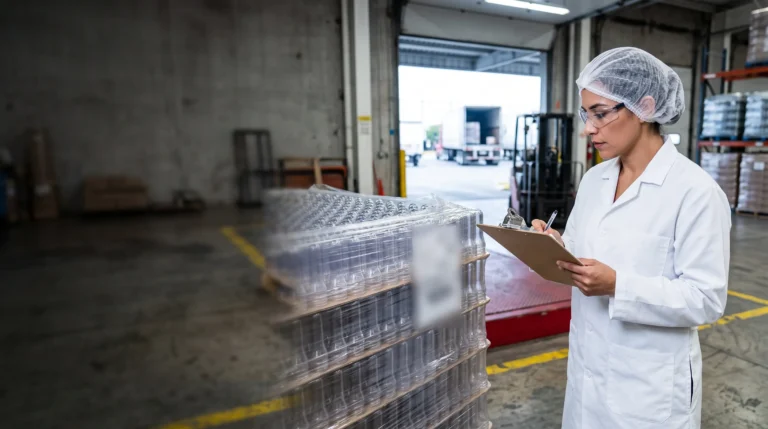
The packaging material arrives in wooden pallets, in cardboard and in bulk, and all three are strange materials waiting for a shortcut. Where the transfer from dirty to clean takes place, and whether it happens the same at eleven o’clock at night as at nine o’clock in the morning, is a design decision that is tested every shift.
Keep the detector. Verify it daily, document the verification, and treat it as what it is: the last barrier, the one that catches what the ten before it failed to prevent. A plant that uses it as the first line is not controlling foreign material. It is measuring how often it loses.
Where We Fit on the Prevention Side
- Packaging material inspected before entry: incoming inspection of containers, lids, and labels for damage, contamination, and foreign material, so whatever reaches your clean side has been checked by someone.
- Crews for a breakage event: when a glass or brittle plastic incident puts product on hold, personnel to segregate, sort and release the affected material while the line recovers.
- 100% inspection when sampling is not enough: on a held population, part by part against the criteria you set, with quantity inspected and disposition recorded by pallet.
- Documentation for the incident file: a report by lot and pallet that goes straight into the file your customer or auditor will ask for.
About our scope: RIDYS Group inspects packaging material, components, and containers. We do not handle food products intended for direct consumption, we do not perform laboratory testing, we do not design or validate HACCP plans, and we do not hold HACCP, FSSC 22000, BRC, or ISO 22000 certification. Our personnel follow the customer’s hygiene and GMP protocols and work under the customer’s documentation and supervision.
Walk your line and look up; then look under the guards. If you’d like, tell us what you receive and where your holds usually start and we’ll show you what an inspection at your dock would look like.