The truck arrives, the paperwork is complete, the certificate is attached, and each value is within specification. I receive the release of the material. That sequence happens thousands of times a year and almost always ends well. The question worth asking is narrower than it seems: what exactly did that document certify, and does it cover the pallets that are currently in its warehouse?
A certificate is the supplier’s statement about a sample, at a point in time
Start with the distinction that is lost. A Certificate of Analysis (CoA) reports measured results from a defined sample: this dimension, this method, this number. A Certificate of conformity (CoC) only states that the material meets the specification, without numbers behind it. Both are legitimate documents, but they are not the same evidence, and a significant portion of what arrives labeled as CoA is actually a declaration of compliance with a header that says otherwise.
Then, look for the typical values. A certificate that reports the normal performance of a product family, and not the results of its material, is a marketing document. It tells you what that resin, that grade of cardboard, or that lid usually does. It says nothing about what came out of the line the week that your order was placed.
The Lot Number Carries the Weight
The certificate certifies a specific lot, and the only thing linking that lot to your delivery is that the document’s identification matches what is physically printed on the pallets. When a shipment consolidates two runs, when one pallet replaces a damaged one, or when the supplier ships with a certificate issued for an earlier order, that link breaks silently. The paperwork stays perfect. The traceability does not.
What a Certificate Cannot Cover
It is issued before the material leaves the supplier, so it says nothing about handling, transportation, or storage. A preform that met dimensions at the molder can arrive deformed because a pallet shifted. A roll of labels that passed at the printer can arrive with the wrong version on the outer wrap. Damage, mix-ups, and mislabeling happen after the document is signed, and no certificate will mention them.
The Certificate Is Half the Decision
The document is the supplier's declaration. Its entry verification is their own declaration, and it has to be small but real:
- Identification against the physical pallet. The lot on the certificate against the lot printed on each pallet.
- Version and print quality of the label. Inspected against the current specification.
- A defined dimensional or functional verification. On a sample of the delivery that actually arrived.
- The result recorded against receipt. It is the only part of the file that is yours.
The moment the difference becomes expensive is predictable. A customer complaint arrives, it is traced to the packaging lot, and the certificate is presented. If your only evidence is the supplier’s document, the conversation is about your supplier’s word. If you can also show that your people verified the identification and inspected the material on arrival, the conversation is about your system. Those are two very different meetings.
What a Well-Executed Incoming Check Looks Like
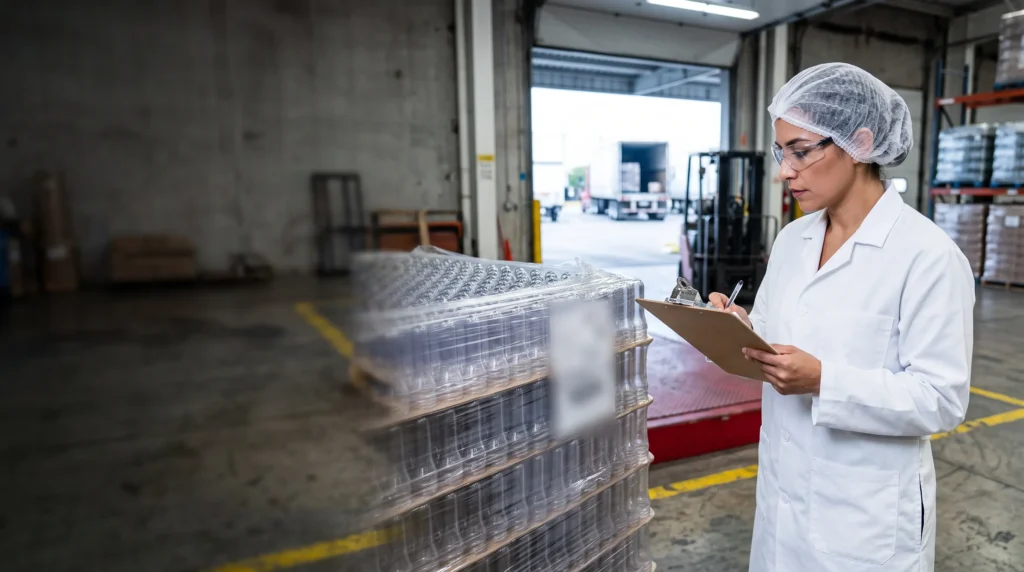
- Document against pallet, on every delivery, with discrepancies raised before the material is put away, not after it has been consumed.
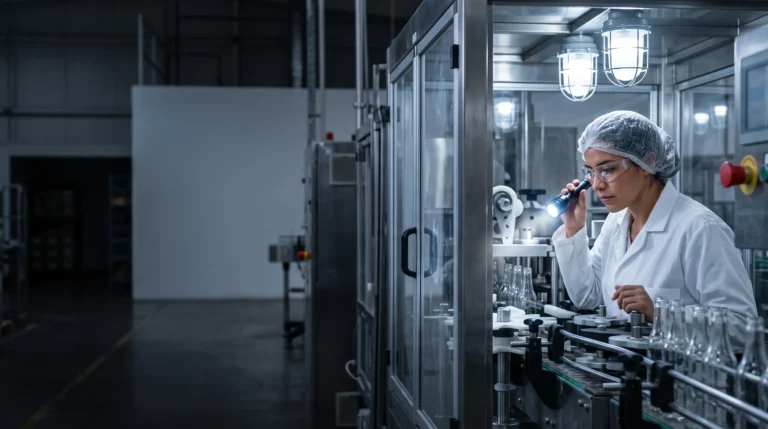
- Dimensional and visual inspections upon arrival, against your specification and limit samples, on the material that actually arrived.
- 100% sorting when a delivery is in question, with crews at your plant or your external warehouse while your line keeps running.
- A record that becomes your evidence, per delivery, lot, and pallet, alongside the supplier’s certificate.
It is the same principle behind our incoming inspection in any industry: your own evidence complements the supplier’s, it does not replace it.
About our scope: RIDYS Group inspects packaging material, components, and containers. We do not handle food products intended for direct consumption, we do not perform food laboratory testing, and we do not hold HACCP, FSSC 22000, BRC, or ISO 22000 certification. Our personnel follow the customer’s hygiene and GMP protocols and work under the customer’s documentation and supervision.
Pull the last certificate you filed and go find the pallet. If you’d like, tell us what you receive and in what volume and we’ll show you what an incoming check would look like at your dock.