
Why Is the Human Factor Key in Quality Control?
The quality control It is an essential pillar in any industry. It ensures that products meet the required standards and prevents errors from reaching the end customer. But even though automation and technology have advanced, the the human factor remains irreplaceable.
The Difference Between Automated Inspection and Human Judgment
Machines can detect visible defects, measure dimensions, and verify tolerances. However, there are aspects that require human judgment, such as interpreting deviations, anticipating risks, and making quick decisions in unexpected situations.
The Responsibility of Quality Inspectors in the Production Chain
The quality inspector is the the last guardian of excellence. Their work is not limited to measuring; it also includes:
Detect deviations before they escalate.
Communicate findings effectively to the production team.
Ensure that international standards are met.
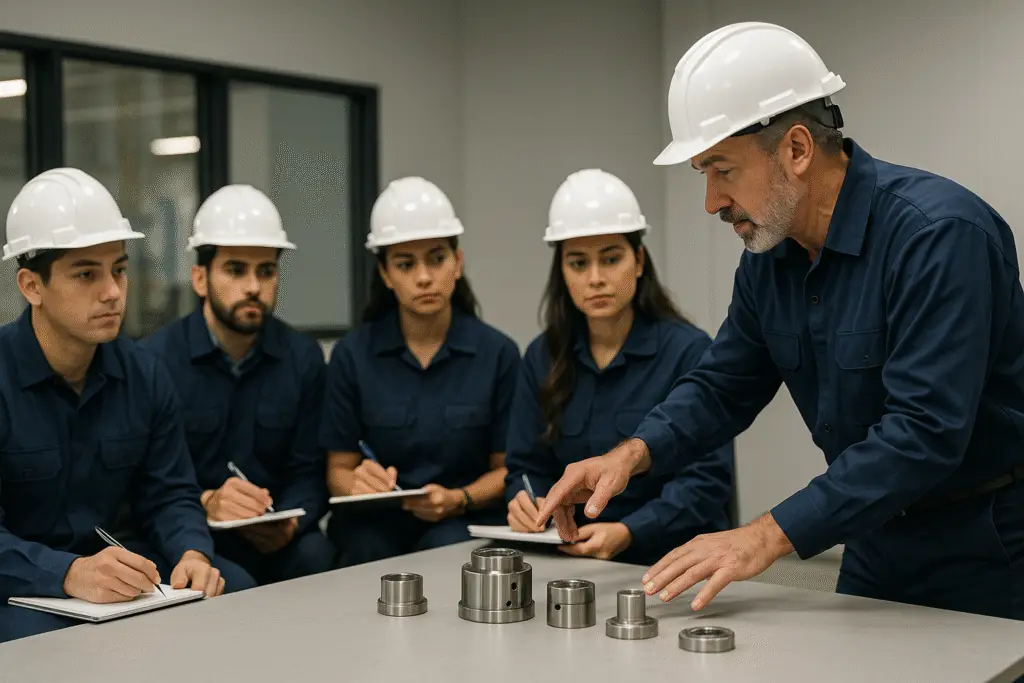
The Impact of Training on Quality Personnel
For the human factor reaches its maximum potential, training plays a central role.
Technical Training in Standards and Inspection Tools
Courses on ISO 9001, IATF 16949 or methodologies such as Six Sigma allow inspectors to perform more precise assessments aligned with global standards.
Training in continuous improvement methodologies
The philosophy Kaizen, the use of Lean Manufacturing and the focus on Statistical process control (SPC) empower the staff to detect, correct and prevent errors proactively.
Development of soft skills
In addition to the technical aspects, an inspector needs human skills such as communication, leadership, and critical thinking to be truly effective in their role.
Benefits for Companies That Invest in Quality Training
The investment in the trained human factor translates into tangible results for companies.
Fewer Errors and Lower Cost of Poor Quality
Every undetected error costs time, money, and reputation. Training reduces the chances of errors.
Higher End Customer Satisfaction
A product that meets international standards generates market trust and builds customer loyalty.
Strengthening the Quality Culture
When the team understands the importance of its work, it builds a company culture focused on excellence.
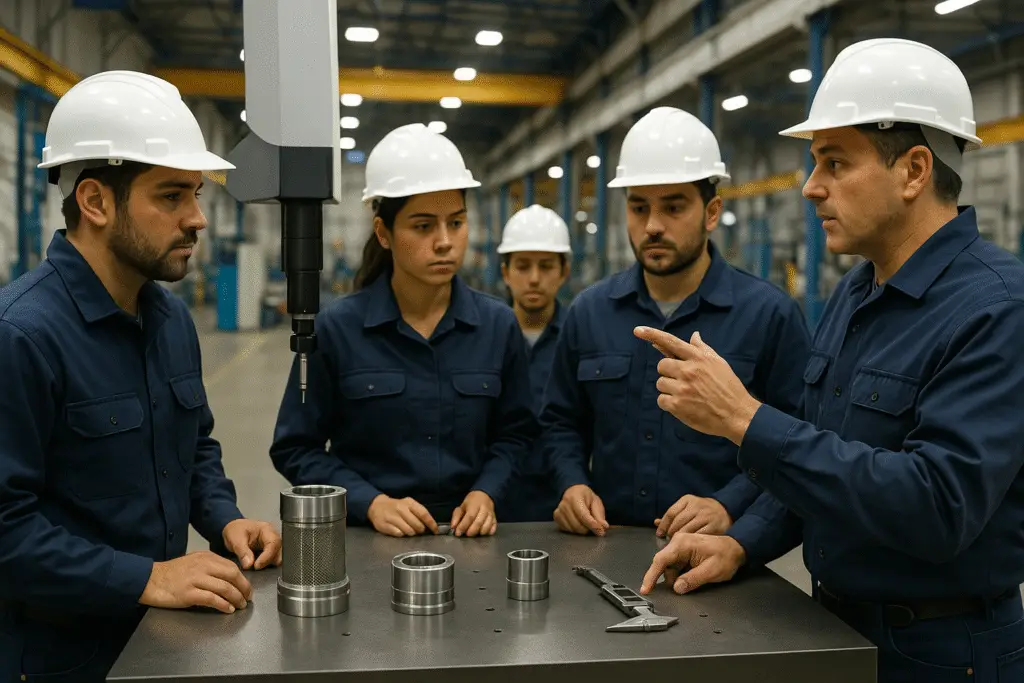
Benefits of Training for Quality Inspectors
The human factor in quality control benefits not only the company but also strengthens inspectors’ careers.
Professional growth and better job opportunities
A trained inspector can aspire to roles such as quality supervisor, coordinator, or auditor.
Recognition and appreciation within the company
Employees who keep their skills up to date are often more valued and recognized by their supervisors.
Greater Confidence and Assurance in Decision-Making
Training provides the confidence needed to face audits, report deviations, and propose improvements.
Soft Skills: The Added Value in Quality Control
Effective Communication and Leadership on the Plant Floor
A good inspector must convey findings clearly to avoid misunderstandings in production.
Teamwork and problem solving
Quality control is a joint effort that requires Collaboration with engineers, operators and supervisors.
Adaptability in Changing Industrial Environments
Inspectors must quickly adapt to new technologies, processes, or international standards.

Practical Cases: How Training Transforms the Human Factor
Example in the Automotive Industry
An inspector trained in APQP (Advanced Product Quality Planning) can anticipate failures and improve vehicle safety.
Example in the Food Industry
Trainings in food safety standards such as ISO 22000 reduce contamination risks and ensure consumer trust.
Example in the Technology Industry
Trained inspectors in control of electronic microcomponents ensure the reliability of high-precision devices.
Frequently Asked Questions About the Human Factor in Quality Control
1. Why is the human factor important in quality control?
Because it brings judgment, experience, and quick decision-making that machines cannot replicate.
2. What types of training are most useful for quality inspectors?
Both technical (ISO, Six Sigma, Lean) and soft skills (leadership, communication, problem solving).
3. How does training benefit the company?
It reduces errors, improves processes, strengthens reputation and increases customer satisfaction.
4. What benefits does the inspector gain from training?
Greater recognition, professional growth, and better job opportunities.
5. Is quality control training a cost or an investment?
It is a strategic investment that generates returns in the short and long term.
6. Can the Human Factor in Quality Be Replaced by Artificial Intelligence?
Not entirely. AI helps, but human interpretation and judgment remain essential.
The human factor in quality control is an irreplaceable element. Although technology advances, inspectors’ analytical skills, judgment, and communication remain essential. Investing in their Technical and soft skills training not only improves processes, it also increases the value of each person in the organization.
👉 Companies that understand this not only produce with quality, but also train highly competent professionals who become ambassadors of excellence.
Want to Know More About Our Services?
We’ll Be in Touch Shortly